
Porto doesn’t rush. That’s the first thing you notice, stepping off the early train from Lisbon into São Bento station. While other European cities wake to commuter frenzy, Porto stirs slowly — the granite-faced buildings along the Douro catching the first amber light, the smell of roasting coffee drifting through narrow streets, the distant sound of a tram grinding up a hill.
I arrived on a Tuesday in late April with no itinerary beyond a hotel reservation and a desire to walk. Porto rewarded that instinct generously.
Arrival at São Bento
Most visitors pass through São Bento station without pausing, which is a mistake. The vestibule is lined with approximately 20,000 azulejo tiles, hand-painted by artist Jorge Colaço between 1905 and 1916.
They depict scenes from Portuguese history (battles, royal processions, rural life) in the distinctive blue-and-white palette that defines Portuguese decorative art. It’s free, it’s public, and it’s one of the most beautiful train stations on earth.
The World Monuments Fund lists São Bento among the most architecturally significant railway stations globally. Standing in that entrance hall, surrounded by hand-painted tiles under a vaulted ceiling, you understand why.
Morning Walk Through Ribeira
From São Bento, I walked downhill through winding alleys toward the river. The Ribeira district, a UNESCO World Heritage Site since 1996, is Porto’s old heart, a vertical tangle of medieval buildings painted in terracotta, yellow, and faded blue.
Laundry hangs from wrought-iron balconies. Cats observe from doorsteps with sovereign indifference.
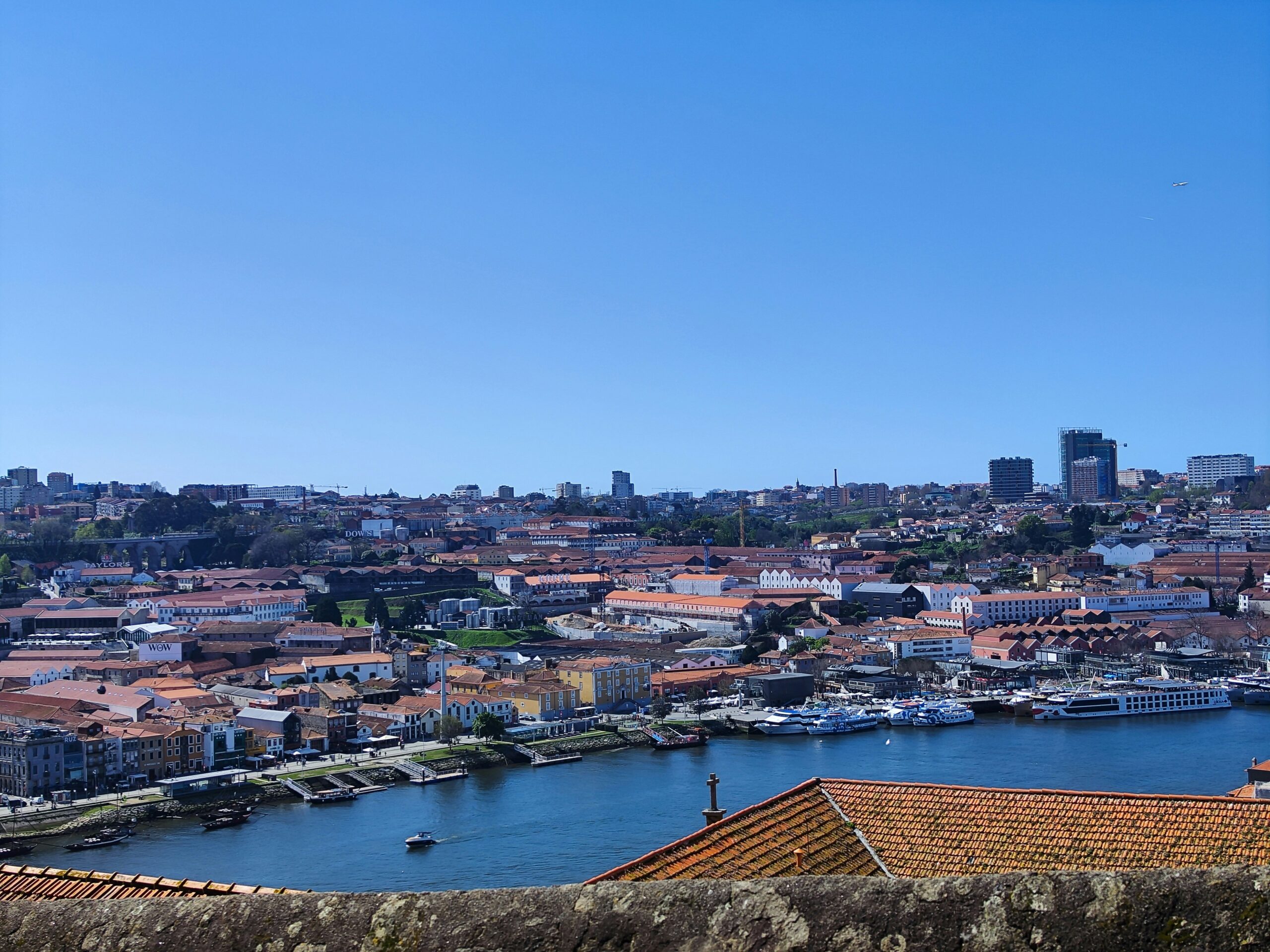
The waterfront Cais da Ribeira opens suddenly after a final narrow passage, and the Douro River stretches before you with the port wine lodges of Vila Nova de Gaia lining the opposite bank.
The Dom Luís I Bridge, a double-deck metal arch designed by a student of Gustave Eiffel, connects the two sides at two different levels. Walking the upper deck offers vertiginous views that no photograph quite captures.
Porto’s Coffee Culture
Portugal drinks more coffee per capita than almost any other European nation, roughly 4.7 kilograms per person per year, according to the International Coffee Organization. In Porto, coffee culture revolves around the café; small, standing-room establishments where a bica (espresso) costs €0.70 and conversation is the main event.
Majestic Café on Rua Santa Catarina, with its Art Nouveau mirrors and carved wood, is Porto’s most famous coffee house. J.K. Rowling reportedly wrote early chapters of Harry Potter here during the mid-1990s. The coffee is decent and the ambiance is extraordinary, though the prices reflect the legend.
For something more authentic, try Café Santiago for a bifana (pork sandwich) and espresso at the counter alongside locals who’ve been coming for decades.
Discovering Azulejos Beyond São Bento
Once you start noticing azulejo tiles, you can’t stop. They cover churches, houses, shops, and even the interior of Mercado do Bolhão, Porto’s grand covered market. The Chapel of Souls (Capela das Almas) on Rua Santa Catarina is wrapped entirely in blue tiles depicting the life of Saint Francis. The side facade of Igreja do Carmo features one of the largest tile panels in the city.
The art form traces back to Moorish influence on the Iberian Peninsula, with the word azulejo deriving from the Arabic al-zulaij, meaning polished stone. By the 18th century, Portugal had made this ceramic tradition entirely its own, an art form that transforms entire buildings into storytelling surfaces.
Sunset at Dom Luís Bridge
If Porto’s mornings are for wandering and coffee, then its evenings belong to the river. I ended each day on the upper deck of Dom Luís Bridge as the sun dropped behind the Gaia hillside, turning the water molten orange. Below, rabelo boats, the flat-bottomed vessels once used to transport port wine barrels, rocked gently at their moorings.
Porto at sunset is a city that looks painted. The light is so particular (warm, golden, slightly hazy from the Atlantic) that you understand why the city’s palette of colours works so well.
However, these aren’t random choices. They are buildings responding to light over centuries.
Practical Tips
Porto’s Francisco Sá Carneiro Airport connects to the city centre via the Metro Violeta line in about 30 minutes. The Andante rechargeable card covers metro, bus, and tram. Walking is the best way to experience the city, but be prepared — Porto is extremely hilly.
Comfortable shoes are non-negotiable. April through June and September through October offer ideal weather with fewer crowds. July and August bring heat above 30°C and heavy tourist traffic.
Whatever you do, ensure you’re documenting your trip. The following resources help you do this effectively:
You can also take inspiration from guides like our exploration of the Scottish Highlands and slow mornings in Porto.