
There is a moment, somewhere along the A82 between Glasgow and Fort William, where the landscape shifts. The gentle farmland gives way to vast, open moorland framed by dark granite peaks, and you realise you’ve entered somewhere genuinely different. The Scottish Highlands are not a destination you travel to, they are a place you feel.
Covering roughly 25,000 square kilometres of northern Scotland, the Highlands contain some of the most dramatic scenery in Europe. They are also surprisingly accessible; Edinburgh and Glasgow are both within a few hours’ drive of the southern Highland boundary. Yet despite their proximity to major cities, the Highlands retain a wild, unhurried character that feels a world apart from modern life.
When to Visit
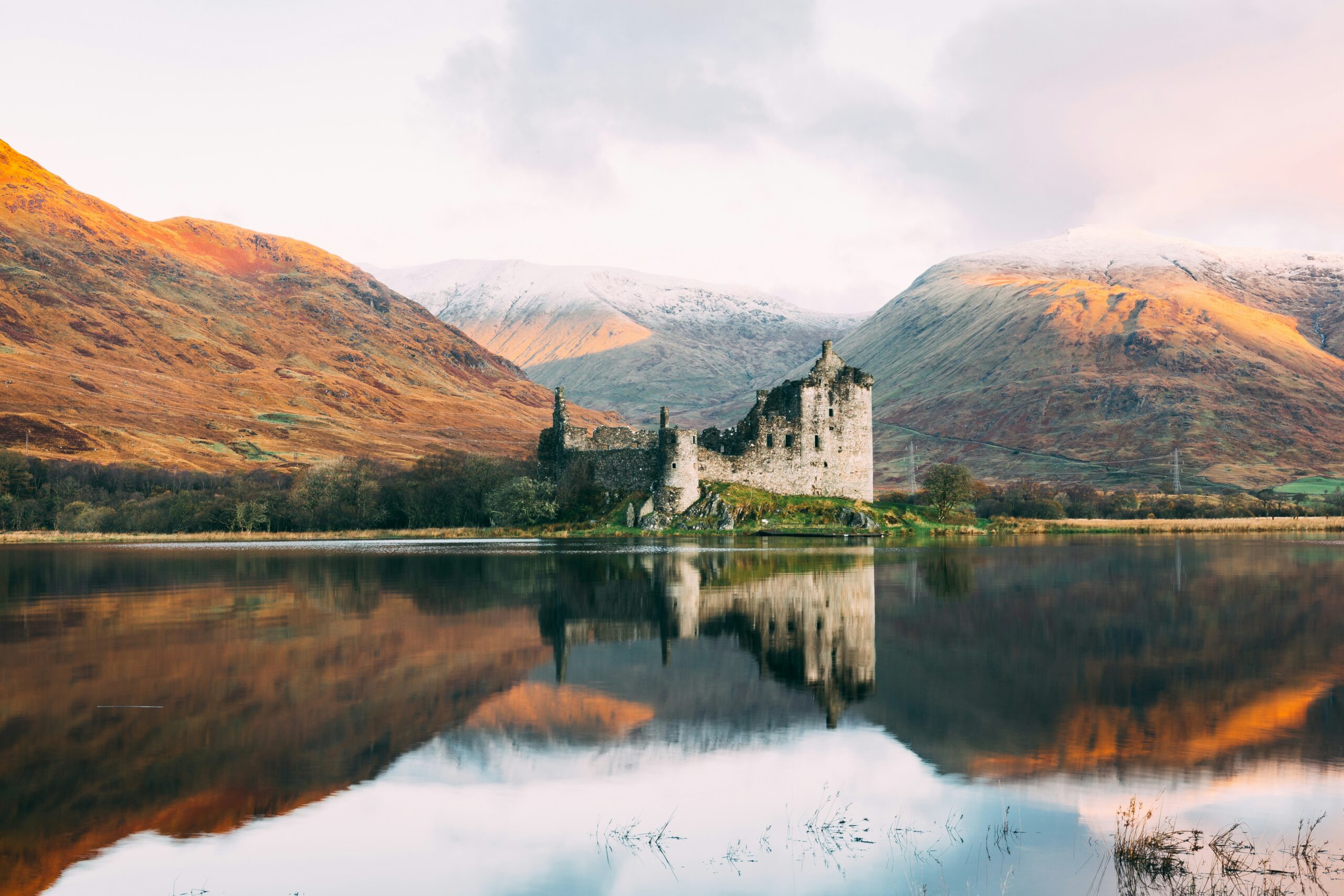
The best months are May through September, when daylight stretches past 10pm and temperatures hover between 12 and 20°C. June offers the longest days and the famous Scottish wildflower bloom. September brings fewer crowds and the beginning of autumn colours that turn the hills gold and amber. VisitScotland notes that summer months see approximately 2.5 million visitors to the Highlands region.
Winter has its own appeal; snow-capped peaks, roaring fires in Highland pubs, and solitude that summer visitors never experience. However, many rural roads become challenging and some attractions close between November and March.
Glen Coe: The Valley of Weeping
Glen Coe is the Highlands distilled into a single valley. Steep, dark mountains rise on either side of the A82 as it winds through a landscape shaped by volcanic eruptions and ice-age glaciers. The valley carries a heavy history; it was here that 38 members of Clan MacDonald were massacred in 1692 in a betrayal that still resonates in Scottish culture.
For walkers, the Lost Valley (Coire Gabhail) is an essential hike; a hidden hanging valley reached by a moderate 4-kilometre return trail. Even non-hikers will find plenty to absorb simply by driving through and stopping at the layby viewpoints.
The National Trust for Scotland manages much of the area and provides excellent interpretation at the Glen Coe Visitor Centre.
Isle of Skye: Where Fantasy Meets Geography
Connected to the mainland by a road bridge since 1995, Skye is the largest of the Inner Hebrides and arguably the most photographed landscape in Scotland.
The Quiraing, a landslip formation on the Trotternish Ridge, offers otherworldly rock formations that look more like Iceland than Britain.
The Old Man of Storr, a towering pinnacle visible from miles away, draws thousands of hikers each year.
Beyond the dramatic geology, Skye has excellent seafood restaurants in Portree, whisky at Talisker Distillery, and fairy-tale pools near Glen Brittle that glow turquoise on sunny days. Allow at least two full days here; three if you want to hike seriously.
Loch Ness: More Than Just a Monster
Loch Ness holds more freshwater than all the lakes in England and Wales combined. At 37 kilometres long and over 230 metres deep, it is genuinely immense.
The monster legend, which surged into global consciousness after a 1933 newspaper report, still brings over a million visitors annually, but the real attraction is the landscape itself.
The ruins of Urquhart Castle, perched on a rocky promontory halfway along the loch, offer spectacular views and a thousand years of turbulent history.
The South Loch Ness Trail provides 45 kilometres of walking through ancient Caledonian pine forest, far from the tourist coaches on the A82.
Cairngorms: Britain’s Largest National Park
Covering 4,528 square kilometres, the Cairngorms National Park is a vast plateau of sub-arctic mountain terrain that supports red deer, golden eagles, and Britain’s only free-roaming reindeer herd.
In winter, CairnGorm Mountain operates Scotland’s highest ski area. In summer, the park offers everything from gentle riverside walks to serious mountain expeditions.
The town of Aviemore serves as the main base, with good accommodation options and the Strathspey Steam Railway for a scenic journey through the pine forests. RSPB Loch Garten is the best spot for osprey watching between April and August.
Practical Tips
Renting a car is practically essential; public transport connects major towns but leaves vast areas inaccessible. Midges (tiny biting flies) are a genuine nuisance from June to September; carry Smidge repellent, which is far more effective than generic sprays.
Mobile phone signal is patchy to non-existent in remote glens, so download offline maps through Google Maps or Maps.me before you set out.
Scotland’s Right to Roam legislation means you can walk, camp, and cycle almost anywhere responsibly. This freedom is rare in Europe and makes the Highlands a paradise for outdoor enthusiasts willing to venture beyond marked trails.
Also, remember to document your trip so you have memories to look back on. Our travel journaling guide shows you exactly how to do this.